


Solvent-Based Adhesives: What They Are, Where They're Used, And How To Run Them
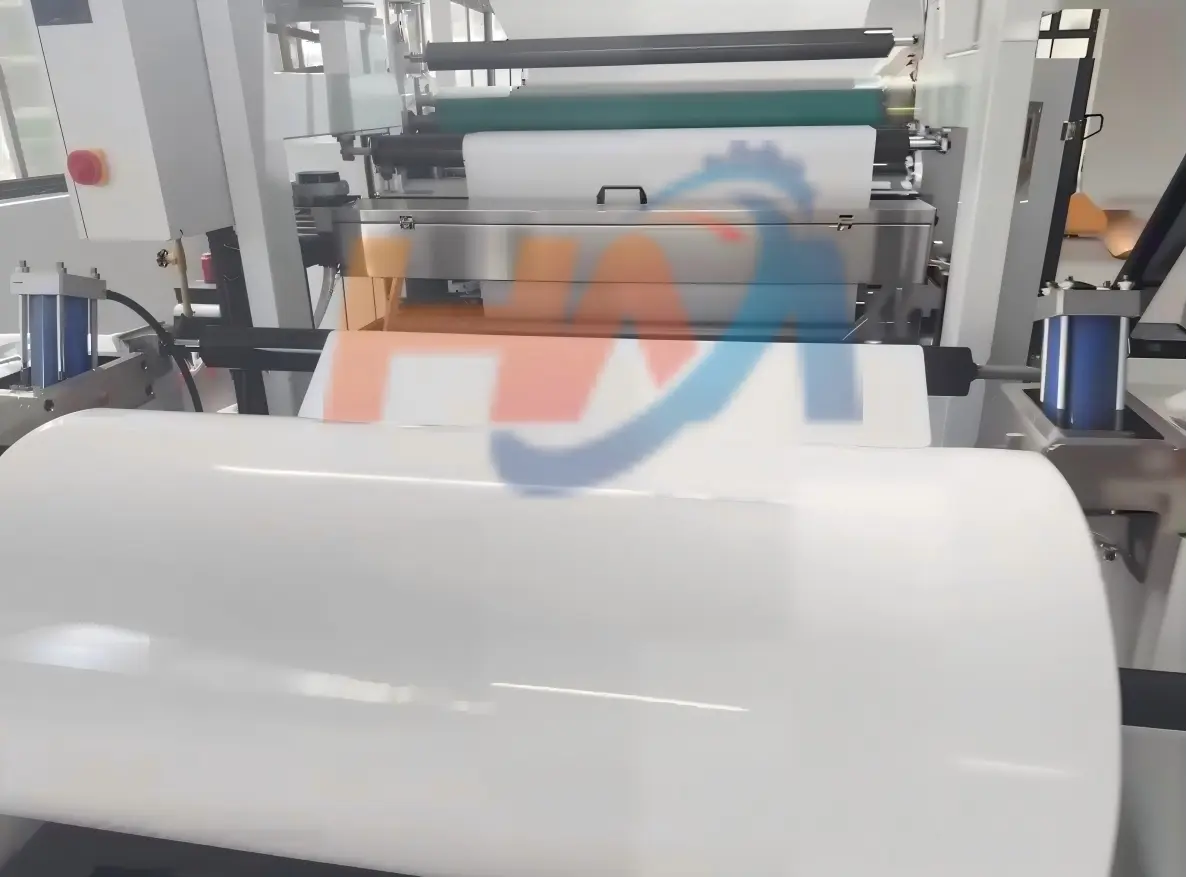
If you've been around coating and laminating for a while, you've almost certainly dealt with solvent-based adhesives. They're one of those technologies that just won't go away - not because people love dealing with solvents, but because the performance is genuinely hard to match in a lot of demanding applications. Let's break down what's actually in them, why they work so well, and what kind of equipment you need to run them properly.
So What's Actually in the Bucket?
A solvent-based adhesive is basically a polymer dissolved in organic solvents. The polymers vary depending on what you're trying to bond - polyurethane, acrylic, synthetic rubber, epoxy, you name it. The solvents are things like ethyl acetate, toluene, or acetone. Typical solid content runs somewhere between 10% and 50%, which means more than half the bucket can be solvent that's just there to thin things out and make the adhesive flowable. That's a key difference from hot melts, which are 100% solids and need heat to get moving.
The way it works is straightforward: you coat the liquid onto your substrate, run it through a drying oven where the solvents evaporate, and what's left behind is a uniform, continuous adhesive film. That dried-down layer is what gives you your bond strength.
Why People Still Reach for Solvent-Based Systems
The biggest selling point is wetting. Because the viscosity is so low, these adhesives get into every little crevice of the substrate surface - even rough or porous stuff. You end up with really thin, really even coatings, and that translates to excellent initial tack and long-term bond reliability. Once fully cured, the adhesive layer can handle high temperatures, weather exposure, and chemical attack better than a lot of water-based or hot melt alternatives. For applications where failure isn't an option, that margin of safety matters.
The obvious downside is the VOC problem. Those organic solvents don't just vanish - they end up in the exhaust air, and you need proper capture and treatment systems to stay compliant with environmental regulations. That's not a trivial add-on cost, and it's something you have to plan for from day one.
Where You'll Typically See These Adhesives
Solvent-based adhesives show up wherever performance demands are high. Flexible packaging for food and pharmaceuticals is a huge market - you need barrier properties, you need hygiene, and you can't afford delamination. They're also common in electronic tapes, automotive interior laminates, waterproofing membranes for construction, optical films, and electrical insulation materials. In all these cases, the bond has to hold up under heat, moisture, or mechanical stress for the life of the product.
What Your Coating Line Needs to Handle This
Running solvent-based adhesives isn't just about the chemistry - it's about the machine setup. First, you need a precision coating head. Slot dies and micro-gravure systems are the usual choices because they give you tight control over coating weight and uniformity. Second, your drying oven has to be designed right: multiple zones with independent temperature control so the solvents flash off gradually without skinning over and trapping solvent underneath. Trapped solvent is a defect nightmare. Third, you need the environmental piece - a thermal oxidizer, solvent recovery system, whatever makes sense for your site and local regs. And fourth, don't underestimate tension control, especially if you're running thin films at speed. One wobble and you've got wrinkles or web breaks.
How We Approach This
We've built a lot of solvent-based coating lines over the years, so we've seen what works and what causes headaches. Our systems cover the range from pilot-scale to full mass production, with web widths and line speeds matched to your output targets. We configure high-precision coating stations, multi-zone ovens that are energy-efficient without sacrificing drying performance, and environmental modules that can be tailored to your specific compliance needs. Beyond the hardware, we work through process parameters with you - coating speeds, oven profiles, tension mapping - so you're not left figuring it all out on your own. The goal is getting you to stable, compliant, high-quality production without the trial-and-error that eats up time and budget.
If you've been around coating and laminating for a while, you've almost certainly dealt with solvent-based adhesives. They're one of those technologies that just won't go away - not because people love dealing with solvents, but because the performance is genuinely hard to match in a lot of demanding applications. Let's break down what's actually in them, why they work so well, and what kind of equipment you need to run them properly.
So What's Actually in the Bucket?
A solvent-based adhesive is basically a polymer dissolved in organic solvents. The polymers vary depending on what you're trying to bond - polyurethane, acrylic, synthetic rubber, epoxy, you name it. The solvents are things like ethyl acetate, toluene, or acetone. Typical solid content runs somewhere between 10% and 50%, which means more than half the bucket can be solvent that's just there to thin things out and make the adhesive flowable. That's a key difference from hot melts, which are 100% solids and need heat to get moving.
The way it works is straightforward: you coat the liquid onto your substrate, run it through a drying oven where the solvents evaporate, and what's left behind is a uniform, continuous adhesive film. That dried-down layer is what gives you your bond strength.
Why People Still Reach for Solvent-Based Systems
The biggest selling point is wetting. Because the viscosity is so low, these adhesives get into every little crevice of the substrate surface - even rough or porous stuff. You end up with really thin, really even coatings, and that translates to excellent initial tack and long-term bond reliability. Once fully cured, the adhesive layer can handle high temperatures, weather exposure, and chemical attack better than a lot of water-based or hot melt alternatives. For applications where failure isn't an option, that margin of safety matters.
The obvious downside is the VOC problem. Those organic solvents don't just vanish - they end up in the exhaust air, and you need proper capture and treatment systems to stay compliant with environmental regulations. That's not a trivial add-on cost, and it's something you have to plan for from day one.
Where You'll Typically See These Adhesives
Solvent-based adhesives show up wherever performance demands are high. Flexible packaging for food and pharmaceuticals is a huge market - you need barrier properties, you need hygiene, and you can't afford delamination. They're also common in electronic tapes, automotive interior laminates, waterproofing membranes for construction, optical films, and electrical insulation materials. In all these cases, the bond has to hold up under heat, moisture, or mechanical stress for the life of the product.
What Your Coating Line Needs to Handle This
Running solvent-based adhesives isn't just about the chemistry - it's about the machine setup. First, you need a precision coating head. Slot dies and micro-gravure systems are the usual choices because they give you tight control over coating weight and uniformity. Second, your drying oven has to be designed right: multiple zones with independent temperature control so the solvents flash off gradually without skinning over and trapping solvent underneath. Trapped solvent is a defect nightmare. Third, you need the environmental piece - a thermal oxidizer, solvent recovery system, whatever makes sense for your site and local regs. And fourth, don't underestimate tension control, especially if you're running thin films at speed. One wobble and you've got wrinkles or web breaks.
How We Approach This
We've built a lot of solvent-based coating lines over the years, so we've seen what works and what causes headaches. Our systems cover the range from pilot-scale to full mass production, with web widths and line speeds matched to your output targets. We configure high-precision coating stations, multi-zone ovens that are energy-efficient without sacrificing drying performance, and environmental modules that can be tailored to your specific compliance needs. Beyond the hardware, we work through process parameters with you - coating speeds, oven profiles, tension mapping - so you're not left figuring it all out on your own. The goal is getting you to stable, compliant, high-quality production without the trial-and-error that eats up time and budget.
If you'd like to learn more or discuss customization options, feel free to contact us!


