


Hydrogel Coating Lines: Precision Engineering For Cooling Patch Production
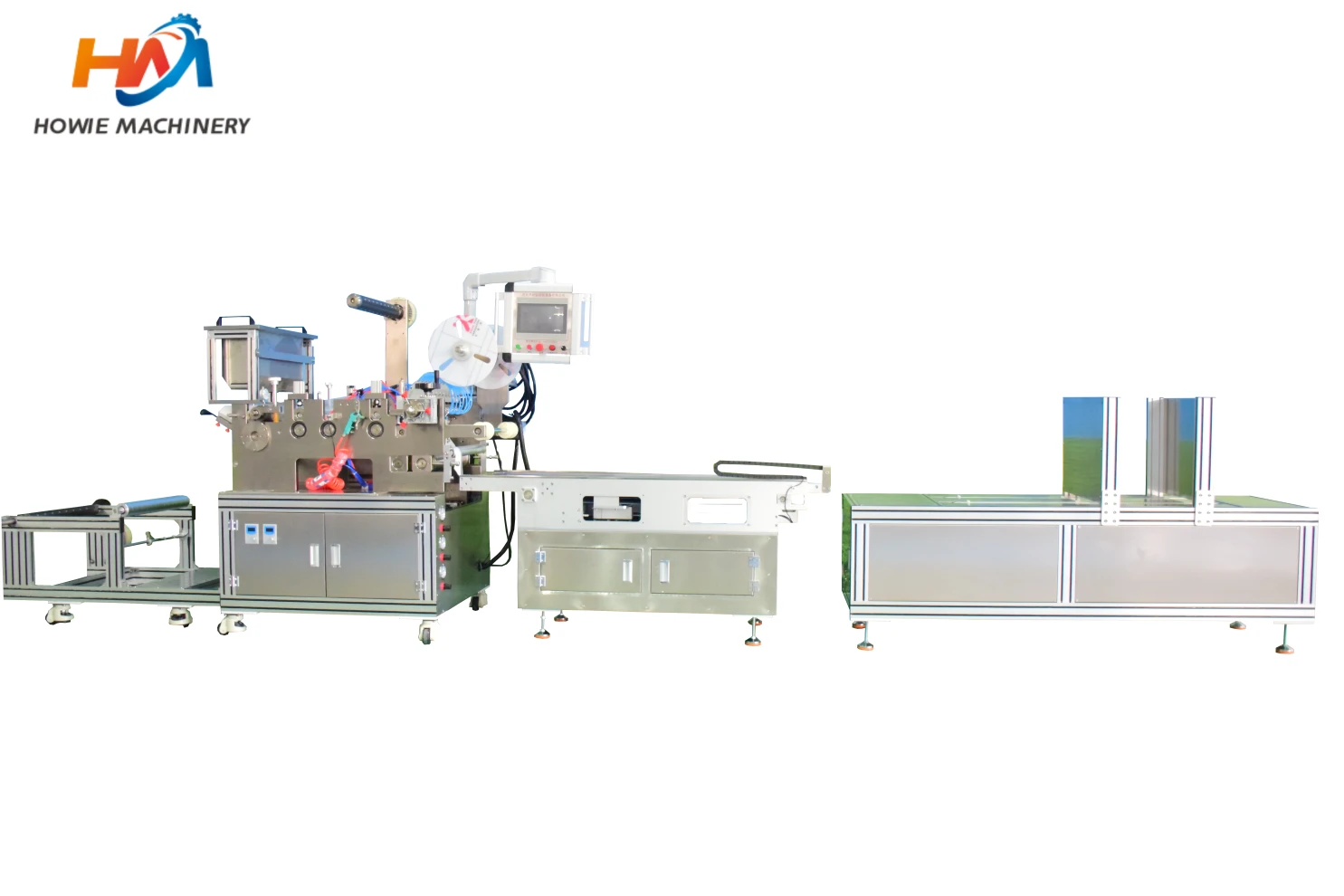
Cooling patches-often referred to as fever relief plasters or hydrogel cooling sheets-have secured a firm place in the over-the-counter healthcare market. They are widely used for managing fevers, easing minor aches, and providing soothing comfort in everyday situations. Their effectiveness rests on a straightforward physical principle: the hydrogel's polymer network traps significant amounts of water, and as this moisture evaporates, it draws heat away from the skin, generating a noticeable cooling sensation. Producing these patches reliably and at scale, however, calls for coating equipment that is purpose-built to handle the unique rheological behavior of hydrogel materials.
At its core, a hydrogel coating machine is a combined coating and forming system engineered for gel-based products-not only cooling patches but also hydrogel wound dressings, medicinal plasters, and cosmetic gel sheets. A standard cooling patch is constructed from three distinct layers: a release liner that protects the adhesive gel surface until use, a gel reservoir layer that holds the active hydrogel formula (water, humectants, and often natural cooling agents like menthol), and a non-woven backing that provides structural support and skin-friendly comfort.
The entire manufacturing sequence runs as a continuous, automated process. First, the backing material is unwound from a parent roll and fed steadily into the coating station. Meanwhile, the hydrogel formulation is prepared in a vacuum mixing system-this step is critical, as it ensures uniform dispersion of ingredients and eliminates entrained air that could otherwise cause pinholes or uneven coating. The homogeneous gel is then delivered to a roller-type coating head, where it is applied onto the moving backing web with precise thickness control. Almost immediately afterward, a release liner is laminated over the gel layer, completing the three-layer composite in one uninterrupted pass. The resulting laminate then moves through embossing rollers, which create perforation lines that allow end-users to tear off individual patches easily. Finally, longitudinal slitting and transverse cutting convert the continuous sheet into finished patches of the desired size and shape.
Modern coating lines are equipped with a range of advanced features aimed at boosting both productivity and product consistency. Programmable logic controllers with touch-screen interfaces give operators fine-grained command over coating thickness, line speed, and drying or curing temperatures. Anti-stretch tension control systems are particularly valuable when handling elastic non-woven backings, as they prevent distortion during web transport-a common challenge in high-speed converting. Depending on the specific model and configuration, production rates typically fall between 120 and 250 patches per minute, with standard coating widths of 480 mm to 500 mm. Because the entire workflow-from unwinding to finished patch-takes place on a single, integrated line, material handling is minimized, and batch-to-batch uniformity is easier to maintain.
That said, the utility of hydrogel coating technology reaches far beyond fever management. The very same equipment can be adapted to manufacture hydrogel-based face masks, under-eye rejuvenating patches, transdermal delivery systems for pharmaceuticals, and advanced wound care dressings that maintain a moist healing environment. As consumer interest in functional gels continues to rise-driven by trends in skincare, sports recovery, and home healthcare-precision coating machinery remains a cornerstone of scalable, high-quality production. It is this blend of speed, accuracy, and versatility that keeps hydrogel coating lines indispensable in today's competitive contract manufacturing landscape.
If you'd like to learn more or discuss customization options, feel free to contact us!


