


What Determines The Maximum Production Speed Of A Coating Line?
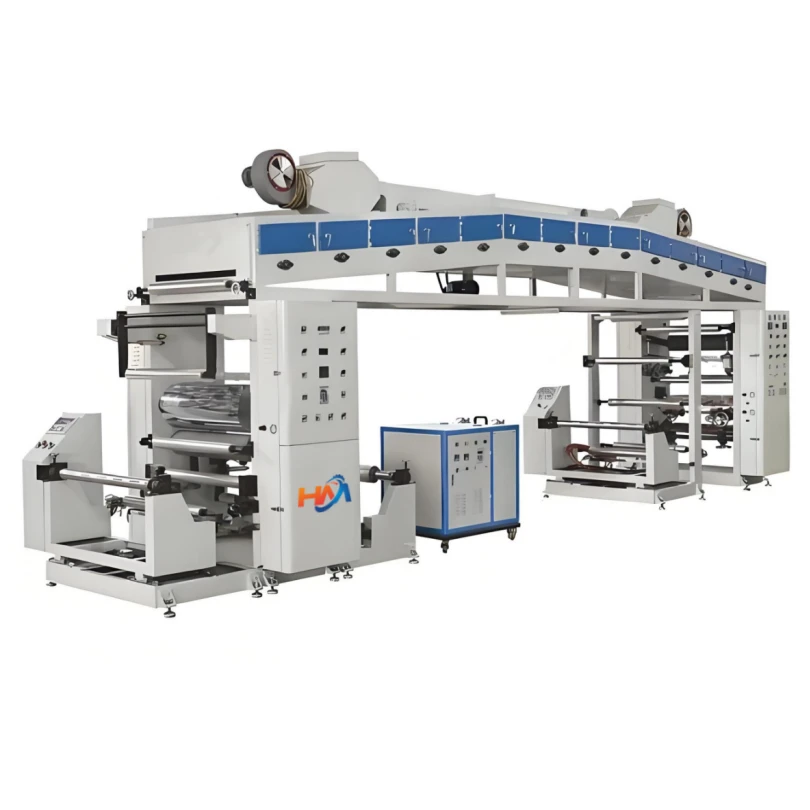
Find out what limits coating line production speed, including adhesive properties, coating technology, drying or cooling capacity, web handling, and rewinding.
When comparing coating machines, buyers often ask one question early in the discussion: how fast can the line run?
It is an important question, but the number alone does not tell the whole story. A machine may reach a certain speed under specific conditions and still run considerably slower when producing a particular adhesive tape or coated film.
The practical production speed depends on the complete process. The adhesive must behave properly, the coating must meet the required specifications, the substrate must travel steadily, and downstream equipment must keep up. If one part becomes a bottleneck, increasing the speed of the main machine may not increase the amount of acceptable finished product.
The adhesive sets part of the operating window
Different adhesives have different processing requirements. Hot melt adhesives, solvent-based adhesives, and water-based formulations cannot always be run under the same conditions.
With hot melt coating, temperature and adhesive flow need to remain suitable for the formulation and coating method. If the adhesive becomes too viscous or its delivery becomes unstable, the coating may become uneven. Simply increasing the line speed will not solve the underlying problem.
The target coating weight also matters. A thin adhesive layer and a heavier layer may behave differently at the same line speed. The substrate, adhesive formulation, and required coating quality must therefore be considered together when estimating production capacity.
The coating method makes a difference
Roll coating, knife coating, and slot-die coating each have their own process characteristics. The best choice depends on the material, the required coating weight, the coating width, and the finished product.
A coating method that works well for one adhesive or substrate may not deliver the same results with another. Before setting a speed target, manufacturers should confirm that the selected coating system can maintain the required coating quality throughout the intended operating range.
It is also worth distinguishing between a machine's maximum mechanical speed and its practical production speed. The first describes what the equipment can reach under specified conditions. The second reflects what the production line can sustain while making acceptable product.
Drying or cooling can become the bottleneck
For solvent-based and water-based coatings, the drying system must remove the required amount of solvent or water. The necessary drying conditions depend on the formulation, coating weight, substrate, oven design, and safety requirements.
If the line runs faster than the process can support, the coating may not reach the required condition before the next production stage. Increasing oven temperature is not automatically the answer; excessive heat can affect the substrate or coating and may introduce other quality problems.
Hot melt coating lines have different thermal requirements, but they still need appropriate conditions for the coated material to proceed through lamination, handling, inspection, or winding. Depending on the process, cooling capacity and downstream handling may limit the achievable speed.
Web handling matters more as speed increases
The substrate must travel through the line without excessive movement, wrinkles, or unstable tension. Unwinding, guiding, tension control, and rewinding all contribute to stable operation.
At higher speeds, a small problem with web tracking or roll balance may become more noticeable. The result can be wrinkles, edge misalignment, uneven winding, or rejected material.
These issues are not necessarily caused by the coating head. When a line cannot run at its expected speed, operators should consider the entire web-handling system instead of focusing on one component.
Check the whole line before setting a production target
The coating section may not be the slowest part of the process. Lamination, cooling, inspection, slitting, and rewinding can all limit overall output if their capacities do not match the coating section.
For this reason, a useful equipment discussion should cover more than the requested line speed. Buyers should provide the substrate type, working width, adhesive formulation, target coating weight, required finished-product quality, and expected output.
It is also important to clarify how production speed will be evaluated. The speed reached during a short trial is not necessarily the same as the speed that can be maintained over a full production shift with acceptable quality and normal operating interruptions.
Choose speed according to the product
The goal is not simply to buy the fastest coating machine. It is to achieve the required production output without creating unnecessary defects, waste, or downtime.
Howie Machinery works with customers to evaluate coating line requirements according to their materials, adhesive systems, coating specifications, and production targets.
If you'd like to learn more or discuss customization options, feel free to contact us!
No Information


