


What Precision Really Means in A Hot Melt Adhesive Coating Machine — And Why It Matters
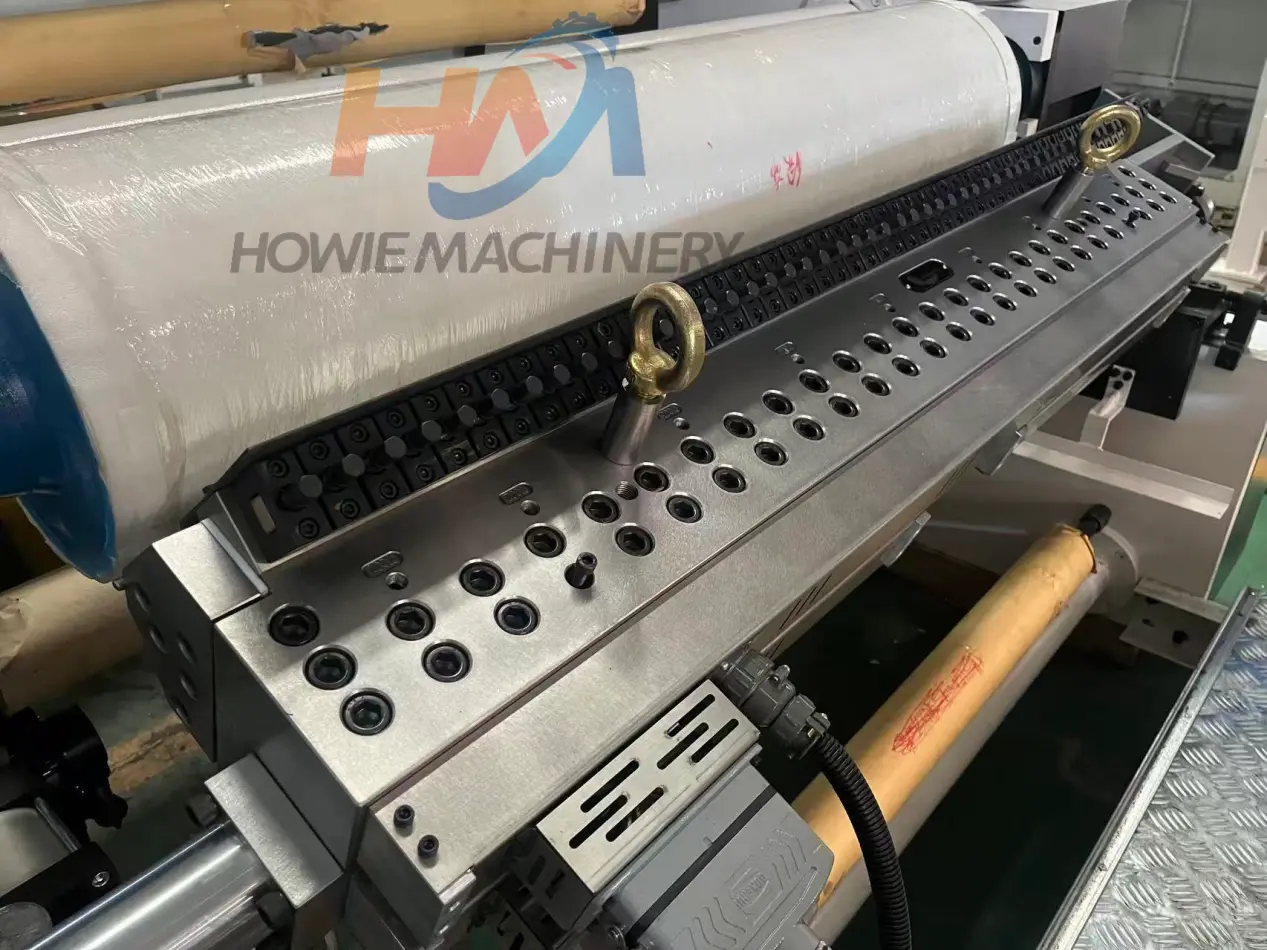
Every converter evaluating a hot melt adhesive coating machine wants "high precision." But precision isn't a single certificate figure. It's the sum of several measurable performance dimensions that directly affect coat weight consistency, bond strength, and overall yield. A truly precise hot melt adhesive coating machine keeps variability in check across four critical areas.
1. Coating Thickness Control - The Micron-Level Baseline
Thickness accuracy is the most visible indicator of coating quality. If the target wet film thickness is 50 microns but the actual output swings between 45 and 55 microns, weak bonds or adhesive strike-through are inevitable. High-quality systems can hold thickness tolerance within ±0.004 mm, even at line speeds above 150 m/min. Lab-scale units often achieve ±0.003 mm for sensitive development work, while industrial-grade machines must maintain that stability under full production dynamics. When assessing any machine, request a continuous thickness profile recorded over a complete roll, not a single-point lab measurement.
2. Coat Weight Uniformity - Grams Per Square Meter That Matter
Coat weight, measured in grams per square meter (gsm), translates thickness into actual adhesive consumption. A deviation of just ±1.5 gsm across the web can create dry patches on one edge and adhesive bleed on the other. An ideal hot melt adhesive coating machine keeps coat weight fluctuation within ±1 gsm. This level of control is often achieved through real-time monitoring - such as beta gauges or infrared sensors - combined with closed-loop pump metering that adjusts for viscosity shifts. A thorough evaluation should include a transverse coat weight map with at least 15 measurement points, not an averaged sample from the center only.
3. Transverse Uniformity - Edge-to-Edge Consistency
Even if the center-line coat weight is on target, a significant drop-off near the edges is a hidden yield killer. On a web 1,000 mm wide or more, the difference between center and edge adhesive weight should be minimal. Advanced machines use slot die technology with independent die bolt adjusters or automatic lip positioning, often driven by a scanning thickness gauge. This closed-loop control can bring edge-to-center variation under 2%. Transverse uniformity data should be a standard part of any machine's acceptance protocol, ensuring the coater delivers consistent performance across the full working width.
4. Repeatability Over Time and Across Batches
True precision isn't just about a snapshot; it's about reproducibility. The same job run next week, on a different shift, with a fresh lot of adhesive, should match the original parameters. Modern hot melt adhesive coating machines achieve this through recipe
management systems that store and recall all critical setpoints - die gap, temperature zones, pump speeds, tension profiles - with servo-driven positioning repeatability down to ±0.01 mm. This level of control is particularly critical in applications like electronics encapsulation, where batch-to-batch consistency is non-negotiable. Measuring first-off approval rates over time gives a better picture of long-term precision than any single test report.
When these four dimensions - thickness control, coat weight uniformity, transverse consistency, and long-term repeatability - work together, the result is a coating process that operators can trust rather than constantly adjust. Any hot melt adhesive coating machine claiming high precision should be able to demonstrate performance in all these areas, with data collected at production speeds and conditions.
If you'd like to learn more or discuss customization options, feel free to contact us!


