


Common Coating Methods And The Flow State Of The Coating Solution
Common coating methods and the flow state of the coating solution
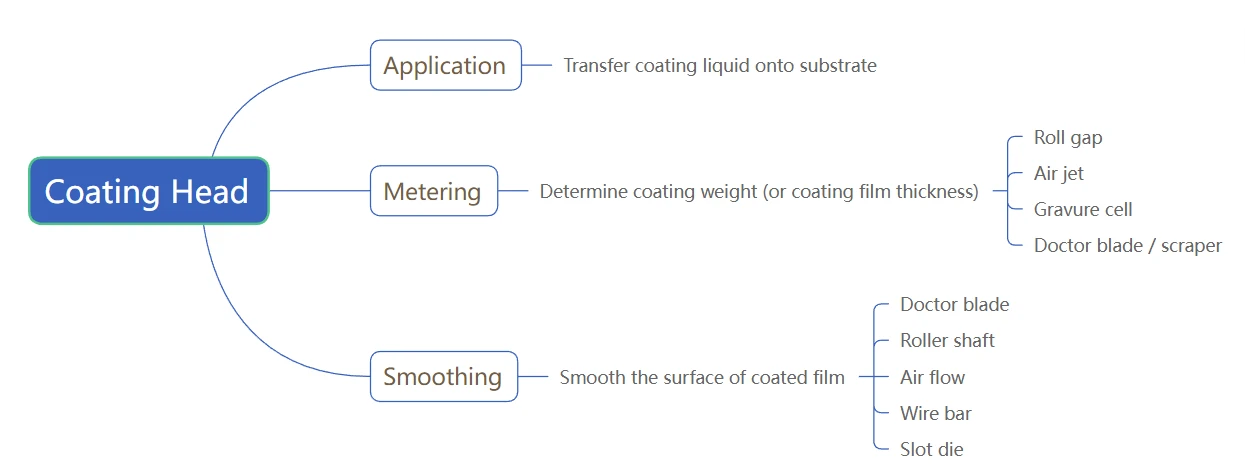
Roll-to-roll wet coating is the core manufacturing process for lithium battery electrodes, optical films, protective films, adhesive tapes and medical substrates. The performance of finished products is fundamentally determined by two core factors: coating mode selection and fluid flow state of coating slurry. Many manufacturers struggle with uneven film thickness, air entrainment, streaks and unstable yield due to mismatched coating heads and unregulated fluid flow parameters. Industry technical experts systematically sort out classification standards of mainstream coating processes and fluid flow laws to provide clear technical references for equipment selection and process optimization.
Coating heads realize liquid transfer through three basic mechanisms: roller transfer, nozzle jetting and free liquid curtain dropping. Most industrial coating technologies combine two or three mechanisms simultaneously. From the perspective of coating weight control, all wet coating processes fall into two core categories: pre-metered coating and post-metered coating, plus special self-metered and composite coating solutions.
Pre-metered coating delivers precisely quantified liquid onto substrates without scraping excess slurry afterward. Its core advantage is that final film thickness is mainly controlled by liquid volume flow, independent of substrate running speed. Typical pre-metered technologies include kiss roll coating, slot-die extrusion, slide coating, curtain coating, gravure coating and reverse roll coating. These contour coating types form stable coating beads and support ultra-thin, high-precision production for electronic and new energy materials.
Post-metered coating applies excessive coating liquid first, then scrapes surplus material to reach target thickness. Representative processes contain comma blade coating, air knife coating, wire bar coating, dip coating and squeeze coating. Most post-metered equipment belongs to leveling coaters with simple structure and low cost, suitable for medium and low-precision mass production such as packaging protective films and general adhesive labels. However, surface tension of coating liquid easily causes microscopic thickness fluctuation on finished films.
Fluid flow behavior directly defines the stable operating window of each coating mode. For single-roller and flat plate coating, capillary number (Ca) and Reynolds number (Re) jointly govern wet film thickness, stability and air entrainment risk. For transfer coating controlled by fixed flow rate q, four mainstream pre-metered modes show obvious differences in fluid limits.
Kiss roll coating relies on substrate tension and wrap angle to stabilize liquid film, with minimal air entrainment risk under steady flow supply. Slide coating can delay air entrainment by applying vacuum to the meniscus; flow rate exerts the strongest influence on film thickness while coating gap has weaker impact. Slot-die coating boasts a much higher maximum operating speed than slide coating, with the minimum stable film thickness reaching 60%–70% of die lip gap under critical capillary number. Die extrusion coating features wider contact area between liquid and web; optimized die geometry and upstream vacuum can significantly lift upper limit of production speed.
Manufacturers should match coating modes according to target precision, slurry rheology and production speed. High-end functional film production prioritizes pre-metered slot-die or curtain coating, while diversified small-batch processing chooses low-cost post-metered blade coating. Reasonable control of flow rate, vacuum degree, temperature and substrate tension eliminates fluid instability defects and effectively improves finished product consistency.
Reference: Industry technical article "Common Coating Modes and Coating Fluid Flow Characteristics" published on WeChat official account coating technology column, August 2025. This article reorganizes and interprets core coating fluid mechanics knowledge for global industry popular science sharing.
If you'd like to learn more or discuss customization options, feel free to contact us!


