


Corona Treatment Principle & Importance For Film Coating Process
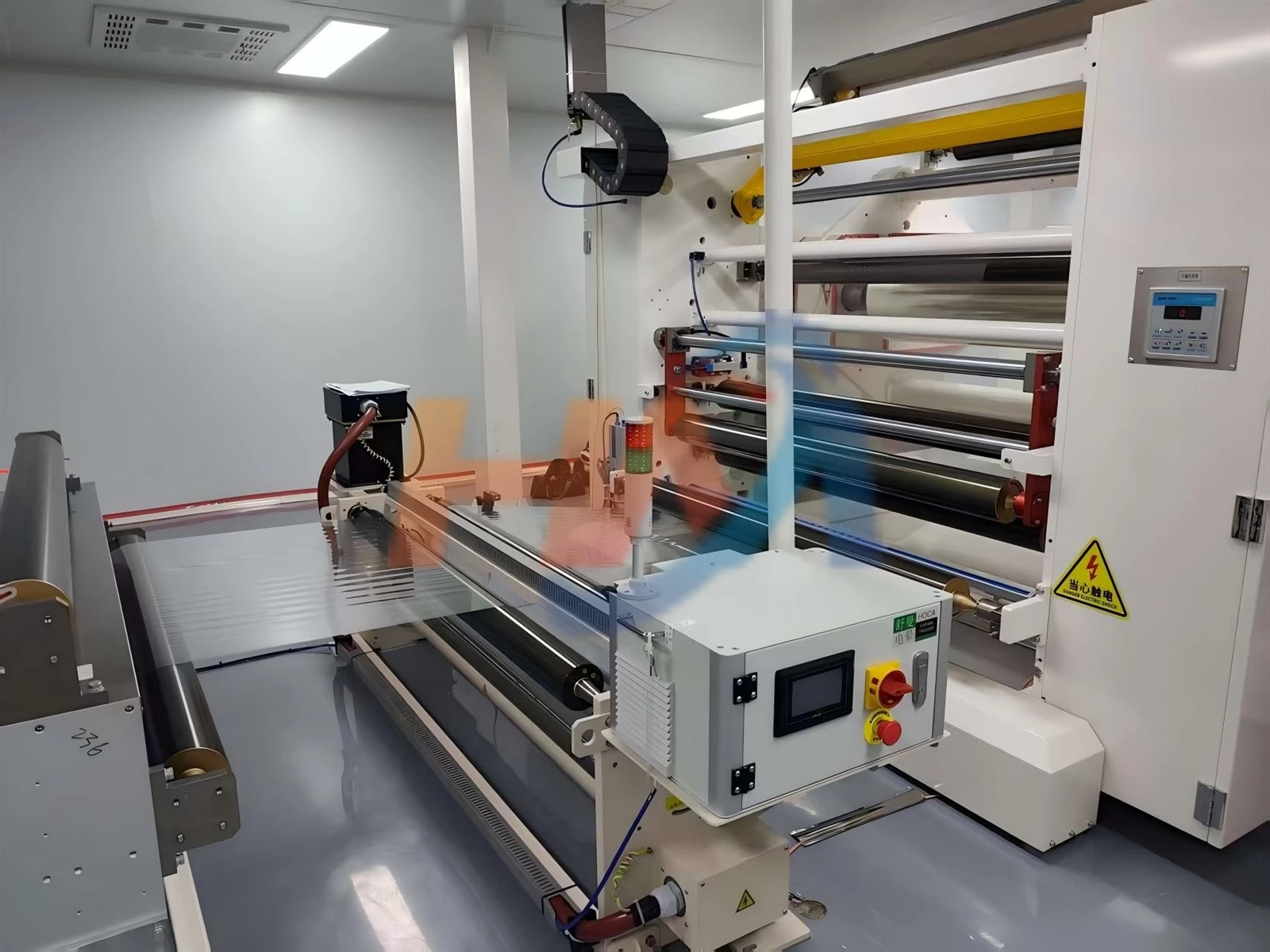
Plastic films such as PET, BOPP and PE are widely used to produce adhesive tapes, protective films and release materials. Many manufacturers often encounter annoying coating problems: adhesive cannot stick firmly to the film surface, coating layers peel off easily, or partial dewetting and pinholes appear after production. Most of these issues are closely related to insufficient surface energy of raw film, and corona treatment becomes an effective solution to tackle this common difficulty.
In simple terms, most plastic materials have low surface energy in their original state. The smooth and dense molecular structure makes it hard for liquid adhesives to spread evenly on the surface. Corona equipment generates high-frequency electric discharge to bombard the film surface as the substrate passes through the treatment station. This physical impact slightly changes the surface molecular structure of the film, forming tiny polar groups on the surface. After such modification, the film can better combine with glue, greatly improving the wettability and adhesion of the coating layer.
Many production operators tend to underestimate corona treatment. Some factories skip this process directly to save production time, only to face a large number of defective products after coating. Even if the film receives corona treatment, the effect will gradually fade away over time. That is why it is best to complete coating immediately after corona processing. Long-time storage of treated film will lead to surface energy attenuation, and the expected adhesion effect cannot be achieved.
The setting of corona power also needs to match different substrates. Excessively low power cannot reach the required surface tension value. On the contrary, overly high electric energy may burn the film surface, causing cracks and affecting the tensile strength and appearance of finished products. For thin flexible films, stable web tension is also essential during treatment. Uneven tension will result in inconsistent treatment effect across the whole web width, bringing uneven coating quality.
For film coating production lines, the corona station is usually installed right before the coating head. Such layout ensures the substrate keeps the optimal surface state before contacting adhesive. This configuration is suitable for the production of PET tape, protective film and various composite film products. For manufacturers running multiple types of substrates, adjustable corona power and gap control help switch production flexibly between different films.
Stable corona treatment is not an optional extra step, but a key process guarantee for high-quality film coating. Properly configured corona equipment and standardized operation help factories reduce coating defects, lower product rejection rate and maintain stable bonding performance of finished tapes and films. For enterprises pursuing consistent product quality, reasonable application of corona technology is an economical and practical way to improve overall production yield.
If you'd like to learn more or discuss customization options, feel free to contact us!
No Information


