


Understanding Dual-Station Coating Technology: A Knowledge Guide From Howie Machinery
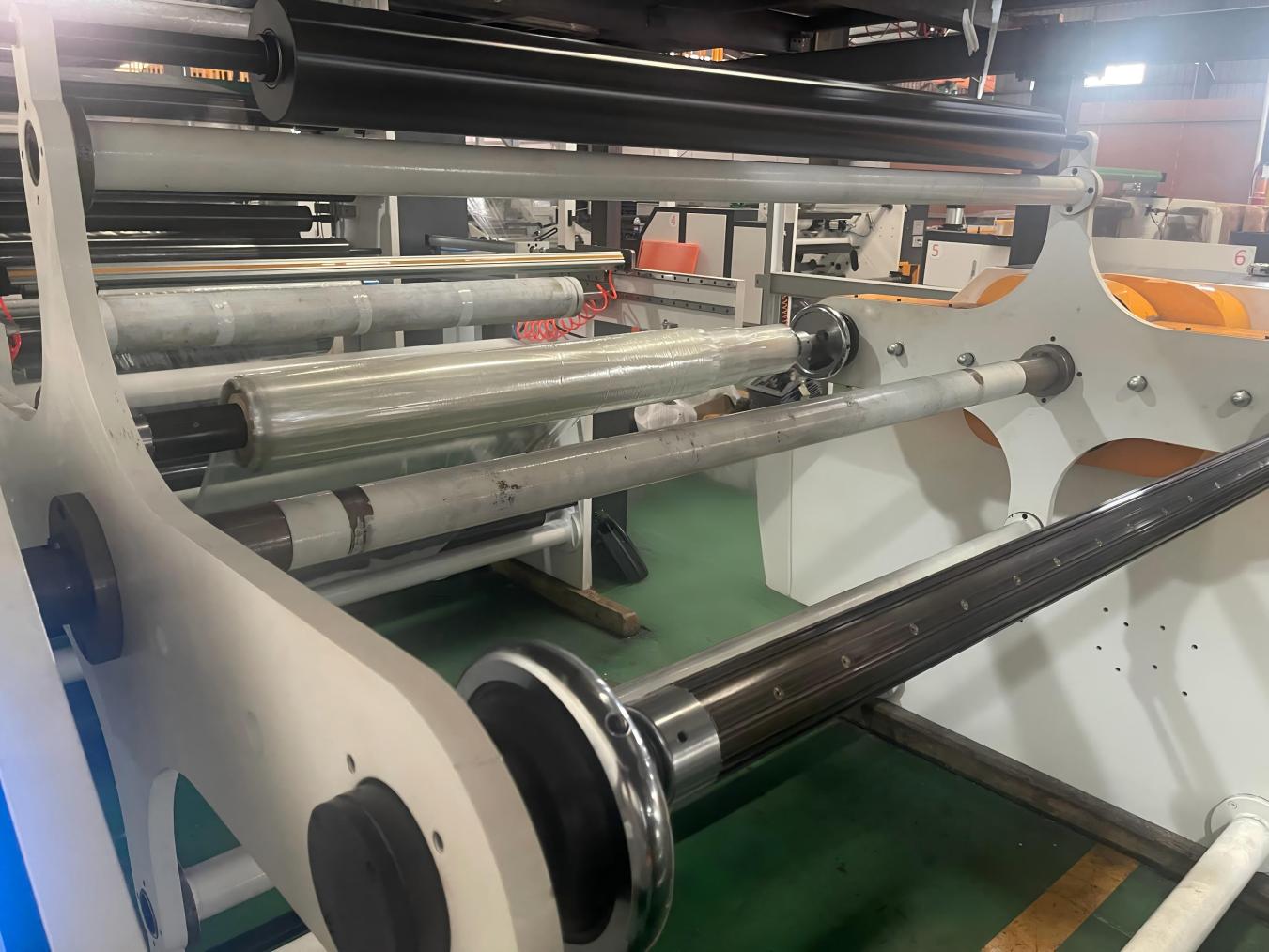
In the world of precision converting and web handling, coating machines are the backbone of manufacturing for tapes, labels, flexible packaging, and advanced functional films. Yet even among experienced engineers, one term often raises questions: the dual-station coater. What exactly does "dual-station" mean, and why has it become a game-changer in modern coating lines? Howie Machinery, a specialist in coating and laminating equipment, breaks down the technology to help manufacturers make smarter investment decisions.
At its core, a dual-station coating machine integrates two independent working positions within a single production line. Most commonly, this refers to the unwind and rewind sections-featuring dual turret unwinds and dual turret rewinds. Each turret holds two rolls of material. When one roll is running, the other is on standby, fully prepared and pre-spliced. As the running roll nears its end, an automated splicing system takes over. In a matter of seconds, the web is cut and bonded to the new roll without ever stopping the line. This uninterrupted material flow is what drives the leap from batch processing to true continuous production.
The technical heart of this capability is the splice mechanism. Depending on the application, the system can perform zero-speed splicing or flying splicing. In zero-speed mode, a small accumulator momentarily feeds the web while the new roll is joined at standstill, which is ideal for thicker substrates or adhesive-coated webs that cannot withstand high-speed snapping. Flying splicing, on the other hand, matches the speed of the incoming roll to the running line, enabling a seamless transition at full production speed-critical for thin films, nonwovens, and high-output packaging materials. Both methods are managed by precise tension control and laser-guided positioning, ensuring that the splice point is flat, strong, and virtually invisible in the finished product.
But dual-station design is not limited to unwinds and rewinds. In advanced coating heads, a dual-station setup can mean two interchangeable coating modules on the same machine frame-for instance, a slot-die station paired with a gravure or comma bar station. This allows processors to switch between coating methods in minutes, rather than hours, dramatically increasing flexibility for R&D environments or contract coaters who handle diverse chemistries and substrates. Howie Machinery engineers often configure such systems with quick-change trolleys and auto-alignment features, so even a small team can execute a method changeover safely and repeatably.
Why does dual-station technology matter for profitability? First, uptime. In a traditional single-station coater, every roll change stops the line. Depending on the roll diameter and coating speed, a single shift can lose 15 to 25 percent of its productive time to stoppages. A dual-station line virtually eliminates those losses. Second, material waste. Stopping and restarting a coating line creates off-spec product at every ramp-up and ramp-down. By running nonstop, dual-station systems drastically cut edge trim and transitional scrap-especially valuable when working with expensive specialty films or adhesives. Third, consistency. Continuous tension and speed stability mean coating thickness, drying profiles, and lamination pressures stay locked within tolerances from the first meter to the last, delivering higher yields and fewer customer rejections.
Of course, integrating dual-station technology requires careful engineering. Web paths must be designed to handle both supported and unsupported splices without wrinkling. Tension zones need individual load-cell feedback across a broader speed range. Safety systems must allow operator access to the idle station without compromising the running line. This is where purpose-built design proves its worth. At Howie Machinery, every dual-station line is developed with an integrated approach-combining mechanical rigidity, precision drives, and intuitive controls-so that the entire system works as a unified process rather than a collection of standalone modules.
Looking ahead, the trend is clear. As sustainability demands thinner materials, solvent-free adhesives, and high-speed processing, the tolerance for downtime is shrinking. Dual-station coaters are becoming the standard not only for mega-scale producers but also for mid-sized converters seeking to compete on both cost and quality. Whether you are coating pressure-sensitive adhesives, battery electrode slurries, or optical films, understanding dual-station principles is the first step toward building a future-proof coating operation.
If you'd like to learn more or discuss customization options, feel free to contact us!


