


How To Select The Optimal Coating Die Head – Professional Knowledge Guide From Howie Machinery
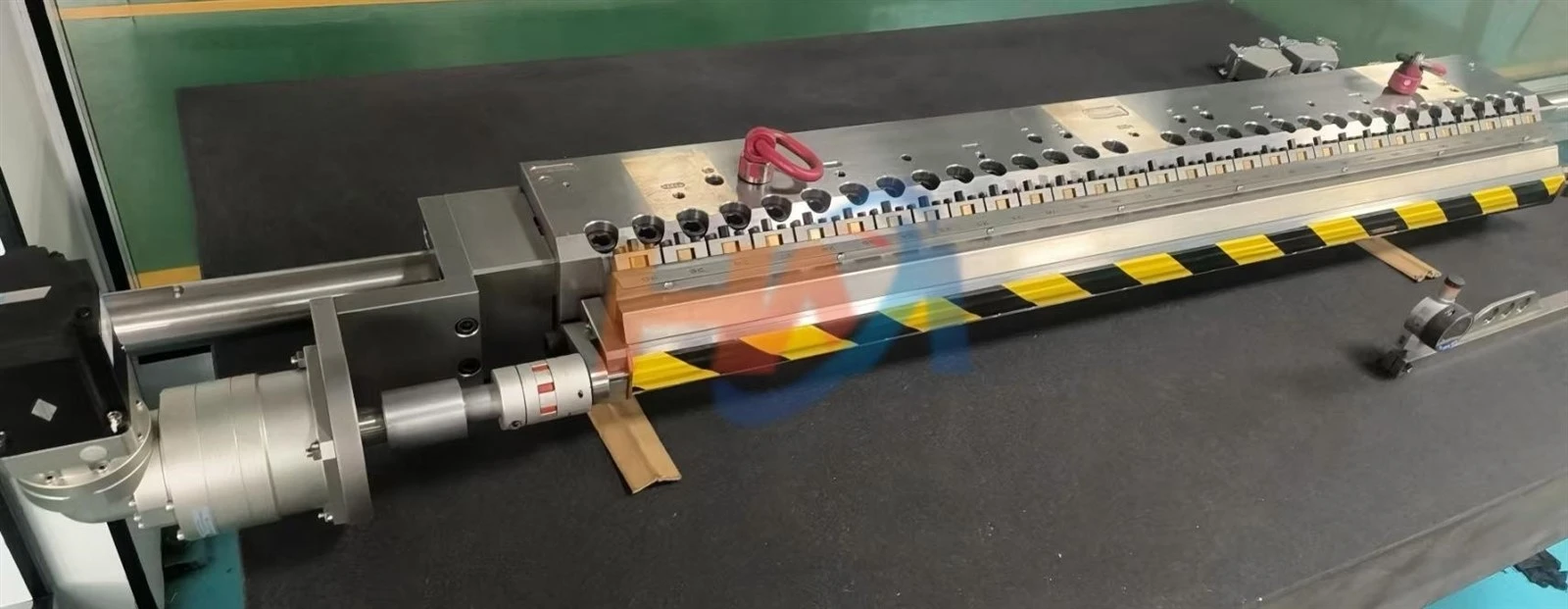
As core precision components of roll-to-roll coating machines, coating die heads directly determine coating uniformity, product yield and long-term production efficiency. Many adhesive tape, film and new material manufacturers face confusion when choosing between slot-die and comma coating heads. Howie Machinery, a professional supplier of complete coating production lines, releases systematic die head selection knowledge to help global customers make cost-effective, process-matched purchasing decisions.
Two mainstream die head structures dominate industrial coating lines: slot-die die and comma bar coating die, each with distinct technical logic and applicable scenarios.A slot die works on a fully enclosed, pre-metered principle. Whether it's a coating liquid, hot melt adhesive, or battery slurry, the fluid enters an internal hanger-type manifold that spreads it evenly across the entire web. The result is consistent coating weight from edge to edge, with thickness variation typically held under ±2%. Because the die lips don't actually touch the moving substrate, this non-contact approach slashes material waste, cuts down on solvent exposure, and virtually eliminates surface scratches-a big deal when you're handling delicate materials like medical release films or lithium battery electrode foils. For high-volume production that demands ultra-thin, high-precision layers below 10 μm, the slot die has become the industry standard, reliably holding its own at line speeds north of 300 meters per minute.
The comma bar die takes a different path entirely. It uses an open, post-metered design that's mechanically simpler to set up and easier on the budget. This makes it a strong fit when upfront cost and straightforward adjustments matter more than chasing sub-micron precision. Viscosity-wise, a comma bar doesn't complain: it handles everything from watery glues all the way up to high-solid butyl rubber. And the thickness range is equally forgiving-you can dial it in anywhere from 30 μm to a full 2.5 mm without swapping out major components.
It fits small-batch diversified production, such as general packing tape, protective film and composite laminating. However, users must accept minor edge material loss and slightly larger thickness fluctuation compared with slot-die equipment.
Beyond coating types, four core factors govern die head selection. . First, material rheology: hot melt adhesives require heating manifolds inside die heads, while corrosive water-based glues demand anti-corrosion SUS stainless steel or tungsten carbide lip coating. Second, target coating thickness: ultra-thin functional films prioritize slot-die; thick foam adhesive layers suit comma dies. Third, production scale: large-volume continuous production chooses slot-die to cut scrap loss; pilot test lines and multi-product workshops adopt comma dies for fast formula switching. Fourth, maintenance capacity: slot-die heads need regular manifold cleaning to avoid blockage, while comma bars feature quick disassembly for daily flushing.
Howie Machinery equips all coating machines with customizable die head solutions. Our engineering team conducts fluid simulation analysis based on customers' substrate, glue formula and line speed, matching automatic lip fine-tuning, independent temperature control and online cleaning modules for different die types.
With growing demand for high-standard flexible packaging and medical adhesive products, precise die head technology becomes a core competitive advantage for coating manufacturers. Howie Machinery will continue to publish periodic technical sharing to popularize coating equipment expertise for worldwide industry partners.
If you'd like to learn more or discuss customization options, feel free to contact us!


