


Slot Die Technology: Precision Coating For Advanced Manufacturing
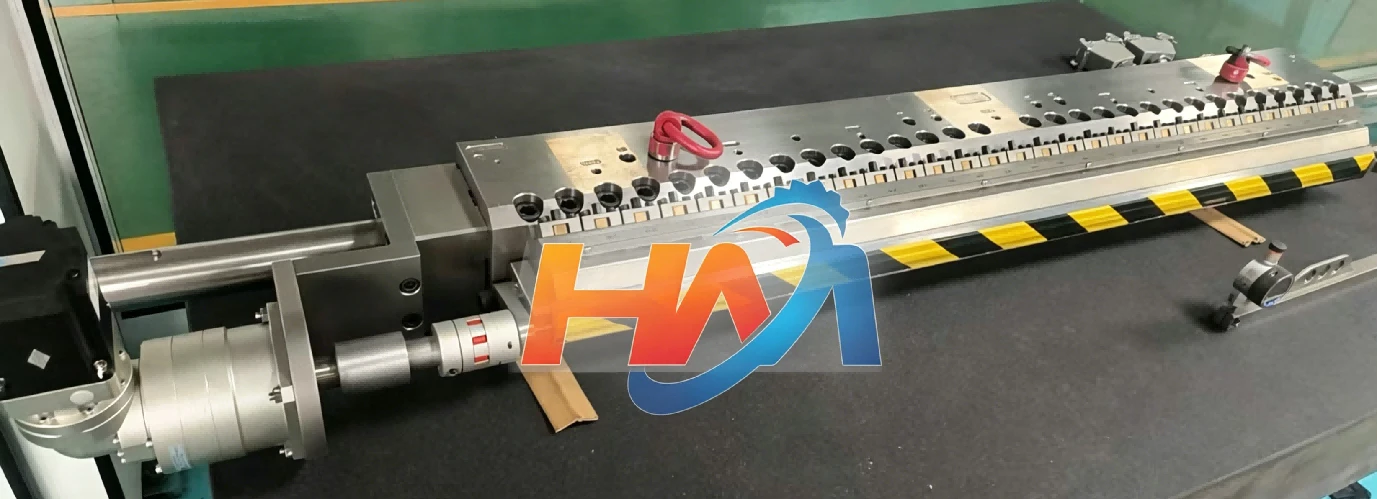
Slot Die Coating: Not New, But Hard to Beat for Precision Work
You might not see slot dies on a factory tour – they're usually tucked inside the coating line – but if you're making lithium batteries, optical films, or high-end adhesive tapes, you almost certainly use one. The technology isn't new. It started back in photographic film days. But today, it's become the default choice for jobs where "close enough" doesn't cut it.
What it is and how it works
In plain terms, a slot die is a precision coating head with an internal manifold and a narrow, machined slit at the bottom. Coating material – anything from runny solvents to thick hot melts – gets pumped into the die, spreads evenly across the width, and then exits through that slit. The substrate moves underneath, and a stable bead of fluid forms and transfers into a thin, uniform layer.
One key thing: it's a closed, non-contact system. Unlike roller or blade coating, there's no scraping or squeezing after the fact. Final wet thickness is decided purely by two numbers: how fast you pump and how fast the line runs. That gives operators clean, predictable control.
Why people like it
The biggest selling point is uniformity. A good slot die setup can hold thickness variation within ±2–3% across the whole web – no edge bead, no streaking. Because the system is enclosed, you lose less material to evaporation or splashing, and contamination stays low. That matters a lot for medical, electronic, and clean-room production.
Another strength is flexibility. Slot dies handle a wide viscosity range, work with solvent-based or 100% solid hot melt formulations, and can do continuous, stripe, or intermittent coating patterns. Material utilization often tops 95%, which is far better than most alternatives. Over time, that saves real money.
What's not so great
Let's be honest: slot dies are expensive upfront. The machining and polishing have to be ultra-precise – any imperfection inside the manifold shows up as uneven coating. Setting one up takes skill. You need operators who understand fluid dynamics and have a steady hand. Changeovers and cleaning are slower than with simpler coating heads. And the whole system is sensitive – substrate tension fluctuations or a tiny speck of dirt can ruin a run.
Where you'll find them
Today, slot die coating is everywhere in advanced manufacturing. Lithium-ion battery electrodes (both anode and cathode) rely on it – consistent coating weight directly affects energy density and safety. You'll also see it in optical films, adhesive tapes, medical dressings, solar cell layers, and electronic functional films. For hot melt adhesives, it delivers the precise coat weight control needed for premium pressure-sensitive tapes, medical patches, and high-end packaging laminates.
(Full disclosure: we design and build custom slot die systems for hot melt and functional adhesive applications. In our experience, once a client gets the die dialed in, they rarely go back to older methods – the micron-level accuracy and material savings are just too good to ignore.)
If you'd like to learn more or discuss customization options, feel free to contact us!


